 How-to
Tips for Fresh Flower Care: Keep Blooms Vibrant Longer
Table of Contents
- Prepare Your Flowers and Supplies Immediately After Unpacking
- How to Trim Flower Stems for Maximum Water Absorption
- Choose and Clean Your Vase Properly
- How to Keep Flowers Fresh with Water and Preservatives
- How Often to Change Flower Water and Maintain Hydration
- How Long Do Cut Flowers Last and How to Extend Vase Life
- Troubleshoot Wilting, Drooping, and Fading Blooms
- Frequently Asked Questions
Last Updated: October 12, 2026
Prepare Your Flowers and Supplies Immediately After Unpacking
When your fresh-cut flowers arrive, the first hour matters most.
Before arranging, gather a clean vase, sharp scissors or floral shears, fresh water, and flower food if you have it.
Inspect each stem for damage, and remove any leaves that will sit below the waterline, since these trap bacteria and speed up decay.
How to Trim Flower Stems for Maximum Water Absorption
Trimming is the single most important step for fresh flower care. Stems that sit too long in transit develop a sealed surface that blocks water absorption; a fresh cut reopens it.
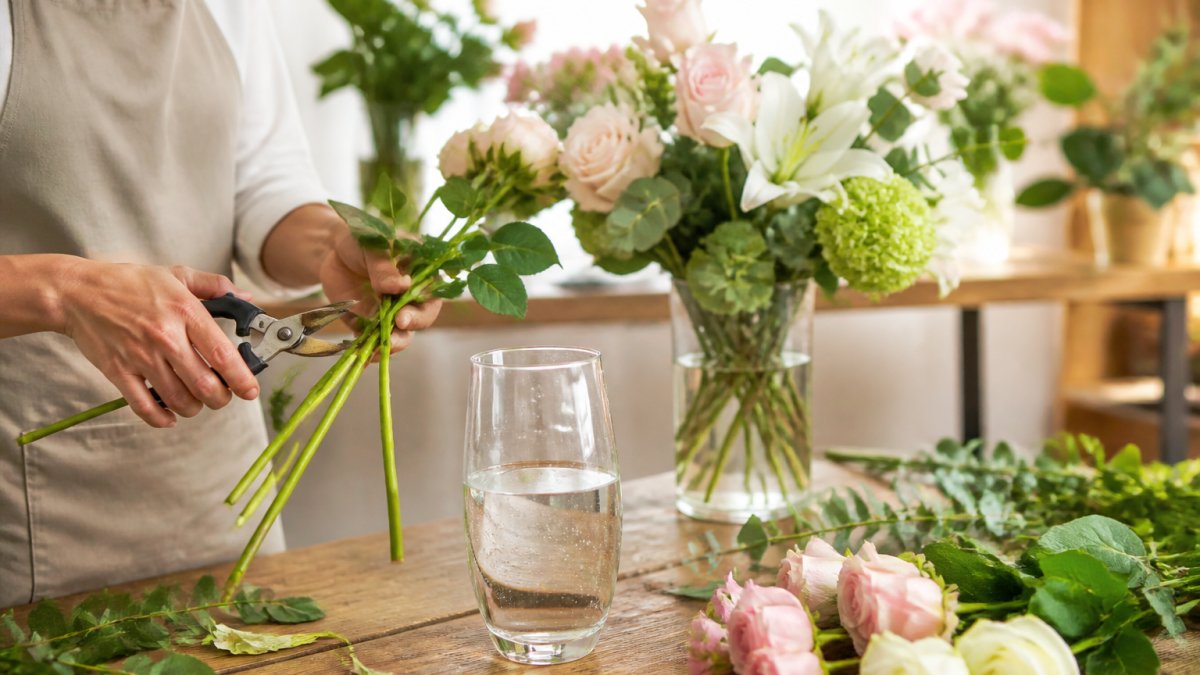
Trim 1-2 inches off each stem with sharp scissors or floral shears; dull blades crush the stem and slow water uptake.
The Angled Cut Method
Cut stems at a 45-degree angle rather than straight across. The angled cut exposes more surface area to the water, meaning faster hydration and longer vase life.
Hold the stem under cool running water while you cut to prevent air from blocking water flow.
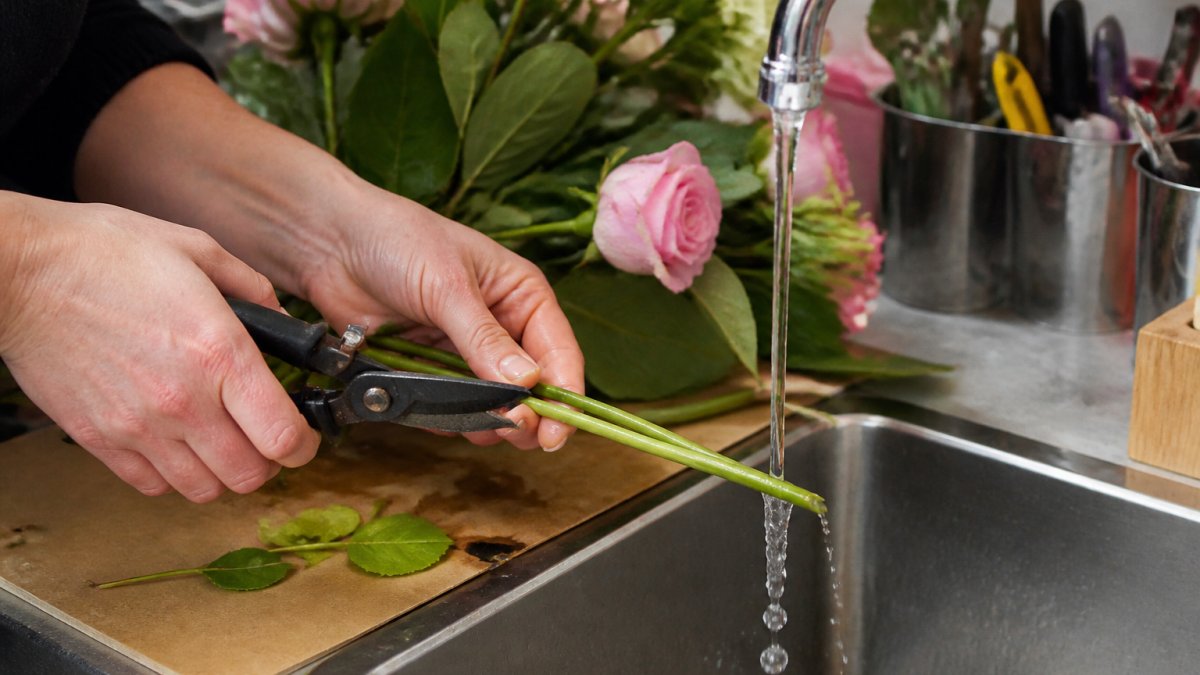
Trimming Tools That Matter
Sharp floral shears or scissors are non-negotiable. Dull tools crush stem tissue, and a crushed stem can't absorb water efficiently.
Clean your tools between cuts to prevent bacteria from spreading from stem to stem.
Choose and Clean Your Vase Properly
Your vase is a water delivery system, and cleanliness directly affects how long flowers stay fresh.
Wash your vase with hot water and soap before arranging, especially the bottom and sides where bacteria hide.
Use a vase large enough that stems don't crowd together, since crowding traps moisture and bacteria.
Choose a clean, wide-mouthed container.
How to Keep Flowers Fresh with Water and Preservatives
Water is the foundation of fresh flower care, but temperature, quality, and additives each change how long stems can pull water to the bloom.
Water Temperature: Match It to the Flower
The old advice to always use cool water is only half right; the right temperature depends on the flower and situation.
- Cool water (roughly 60-70°F) is the safe default for most cut flowers, including roses, carnations, chrysanthemums, and lilies. It holds more dissolved oxygen and slows bacterial growth.
- Warm water (about 100-110°F) is useful for flowers that arrived limp or were shipped dry, and for woody stems like lilac, hydrangea, and stock. It moves into the stem faster and can revive a drooping head within an hour or two. Let it cool to room temperature after the stems have hydrated.
- Room-temperature water is fine for tulips, daffodils, and most spring bulbs, which are sensitive to temperature shock.
A useful rule: if the flower is thirsty and drooping, warmer water helps it drink. If it's healthy and you want it to last, cooler water slows aging.
Water Quality: What's Actually in Your Tap
Municipal tap water is treated with chlorine or chloramine, and both can shorten vase life.
Hard water, high in calcium and magnesium, leaves mineral deposits on stems and can block water-conducting tissue.
Softened water is a common mistake: softeners replace calcium and magnesium with sodium, which is toxic to cut flowers at household concentrations.
Commercial Flower Food: What It Actually Does
Commercial flower food is not just sugar. A formulated packet contains three things:
- A carbohydrate source (usually sucrose or dextrose) to feed the flower after it is cut.
- An acidifier (often citric acid) to lower pH, improving water uptake and slowing microbial growth.
- A biocide (such as a quaternary ammonium compound) to kill bacteria and yeast that clog stem ends.
This three-part formula is why commercial flower food outperforms most homemade recipes. Follow the packet ratio exactly; doubling the powder doesn't double the benefit, and too strong a biocide damages stem tissue.
Household Alternatives: What Works and What Doesn't
How the common kitchen-counter remedies stack up:
- Sugar alone feeds the flower but also feeds bacteria. Without an acidifier and biocide, sugar usually shortens vase life rather than extending it.
- Lemon juice or white vinegar plus sugar is the closest homemade approximation of commercial food. The acid lowers pH and the sugar feeds the bloom. It lacks a biocide, so it's not as effective as a formulated packet, but it's meaningfully better than plain water.
- A crushed aspirin is a persistent myth. Aspirin is acetylsalicylic acid and does lower pH slightly, but the effect is weak and inconsistent.
If you have commercial flower food, use it. If not, the lemon-juice-and-sugar mix is the best household stand-in; everything else is anecdotal.
A Simple Preservative Routine
- Mix flower food at the packet ratio in a clean pitcher of cool water.
- Fill the vase about one-third full so stems have room and the water line stays below any foliage.
- Add flowers, then top off with the same mixed solution rather than plain water as the level drops.
- Every two to three days, dump the old solution, rinse the vase, recut stems by about half an inch at a 45-degree angle, and refill with fresh mixed solution.
How Often to Change Flower Water and Maintain Hydration
Consistent water management keeps flowers hydrated and removes the bacterial buildup that causes wilting.
Daily Water Changes and Refilling
Check your flowers daily and top off with cool water if the level drops; letting them sit dry even a few hours causes stress.
Some flowers drink more than others: roses and sunflowers are thirsty, while carnations and chrysanthemums drink less. Check more often if water disappears quickly.
Remove Leaves Below the Waterline
Any leaf underwater will eventually rot and introduce bacteria into your vase, one of the easiest ways to accidentally shorten vase life.
Strip all leaves from the bottom 2-3 inches of each stem.
Order fresh birthday, sympathy & wedding flowers today →
Do this when you first arrange the flowers and again each time you change the water.
How Long Do Cut Flowers Last and How to Extend Vase Life
Vase life depends on the flower, how fresh it was when you received it, and how you treat it in the first 24 hours. Most arrangements last 7-14 days with good care, but the care varies by flower type.
Roses
Roses are durable but prone to bent necks and premature petal drop if water uptake is interrupted.
- Recut stems at a 45-degree angle under running water, then place them in cool water with flower food.
- Remove the outer guard petals if they look bruised or brown. This is normal shipping damage, not a sign the rose is dying.
- Strip all leaves below the waterline. Rose leaves rot quickly and cloud the water within a day.
Typical vase life: 10-14 days.
Tulips
Tulips keep growing after they are cut, which is why they bend, twist, and open wide over time. This is normal, not decline.
- Use cool, room-temperature water. Tulips dislike temperature shock.
- Do not recut more than half an inch at a time. Tulip stems are hollow and can collapse if cut too aggressively.
- Skip the flower food if you want them to stay closed longer. Sugar encourages tulips to open faster.
Typical vase life: 7-10 days.
Lilies
Lilies open progressively, so a single stem can look fresh for well over a week as new buds open.
- Remove the anthers (the pollen-covered tips) as soon as a bud opens. Pollen stains fabric and petals, and removing it also reduces the flower's energy drain.
- Recut stems at an angle and use cool water with flower food.
- Keep lilies away from cats. Every part of the plant, including the pollen, is toxic to cats and can cause kidney failure.
Typical vase life: 10-14 days per stem, with successive blooms.
Hydrangeas
Hydrangeas are the most demanding common cut flower, wilting fast when water levels drop and looking dead within hours.
- Recut stems at an angle, then dip the bottom inch in boiling water for about 30 seconds before placing them in cool water. This seals the milky sap that otherwise clogs the stem.
- Alternatively, submerge the entire flower head in cool water for 20-30 minutes to rehydrate wilted blooms. This works surprisingly well.
- Keep the vase topped off daily. Hydrangeas drink heavily.
Typical vase life: 7-12 days with consistent attention.
Carnations and Chrysanthemums
These are the workhorses of the cut-flower world and forgive missed water changes better than most blooms.
- Recut stems at a 45-degree angle. Carnation stems have nodes that can block water if cut just above one, so cut between nodes.
- Use cool water with flower food.
- Remove any leaves below the waterline.
Typical vase life: 14-21 days.
Sunflowers
Sunflowers are thirsty and heavy-headed, which makes them prone to drooping.
- Use a tall, heavy vase so the stems have support.
- Recut stems at an angle and change water every other day.
- Top off water daily. Sunflowers can drink a surprising amount.
Typical vase life: 7-12 days.
Daffodils and Other Bulb Flowers
Daffodils, narcissus, and paperwhites release a sap that is toxic to other flowers.
- Condition daffodils separately in their own vase for at least six hours before mixing them with other blooms.
- Do not recut daffodil stems after they have been in water, because the sap will re-release.
- Use cool water and skip flower food, which can shorten their life.
Typical vase life: 6-10 days.
Optimal Storage Conditions
Regardless of flower type, the environment around the vase matters as much as what is in it.
- Light: Bright, indirect light is ideal. Direct sun fades petals and warms the water.
- Heat: Keep arrangements away from radiators, heating vents, and appliances. A cool room extends freshness noticeably.
- Ethylene: Ripening fruit, dying blooms, and cigarette smoke all release ethylene, which ages flowers rapidly. Keep arrangements away from all three.
Troubleshoot Wilting, Drooping, and Fading Blooms
Sometimes flowers wilt despite your best efforts.
Wilting petals usually mean the stems aren't absorbing water.
Drooping flower heads often signal bacterial buildup or a clogged stem.
Fading petals are natural aging, but it happens faster in heat or direct sunlight.
Cloudy water indicates bacterial growth.
Fresh flowers are a gift that keeps giving when you care for them properly.
At Flowers by Dena, we hand-deliver premium fresh-cut flowers to our community in Swedesboro, and we want every arrangement to bring joy for as long as possible. Order fresh birthday, sympathy, and wedding flowers from Flowers by Dena today and experience arrangements designed to last with proper care.
Frequently Asked Questions
How often should you change the water in a flower vase?
Change the water every 2 to 3 days for most fresh-cut flowers. Daily water changes are ideal if you want to maximize vase life and keep your bouquet looking its best. When you refill, remove any wilted petals or leaves that have fallen into the water, as bacteria can accelerate fading. Use cool, fresh water each time, and rinse the vase thoroughly before refilling to remove bacterial buildup.
Should you cut flower stems before putting them in water?
Yes, always trim stems before arranging fresh-cut flowers. Cut about 1 to 2 inches from the bottom of each stem at a 45-degree angle using sharp floral shears or scissors. This angled cut increases the surface area for water absorption and prevents the stem from sealing over. Trim stems again every 2 to 3 days when you change the water to maintain hydration and extend vase life significantly.
Does flower food actually work?
Flower food is effective because it contains nutrients, biocides to prevent bacterial growth, and a pH buffer to optimize water absorption. If you don't have commercial floral preservative, a simple alternative is to dissolve a small amount of sugar in cool water to feed the blooms. Either method helps extend freshness, though commercial flower food is formulated specifically for cut-flower hydration.
How long do fresh-cut flowers typically last?
Most fresh-cut flowers last 7 to 12 days with proper care, though some varieties last longer. Roses and carnations often reach 10 to 14 days, while tulips and daisies may last 7 to 10 days. Sunflowers can persist for 2 to 3 weeks. Longevity depends on the flower type, water quality, temperature, and how consistently you change the water and remove spent blooms. Keeping flowers in a cool location away from direct sunlight and heat extends vase life significantly.