 How-to
9 Steps to Design Custom Sympathy Bouquets
Last Updated: November 24, 2026
Quick Summary
Designing custom sympathy bouquets starts with the grieving family, not the flowers. Choose blooms, colors, and a shape that reflect the person who died, then build the arrangement so it reads as calm and sincere from across a room. The designs families remember most are the ones that felt personal.
- A sympathy bouquet shares three traits: soft colors, a simple shape, and one personal detail.
- Condition stems by cutting at a 45-degree angle and soaking them at least two hours.
- Place greenery first, low and wide, working in odd numbers.
- Floral foam suits structured shapes like wreaths and crosses; a tape grid suits loose bouquets.
- Whites, creams, pale pinks, and muted lavenders read as calm and respectful.
Table of Contents
- How do you design custom sympathy bouquets?
- Sympathy bouquet ideas to start your design
- The meaning of sympathy flowers and what each bloom says
- How to make a sympathy flower arrangement step by step
- Choosing the color palette, size, and base for a condolence arrangement
- Personalizing with keepsakes, mementos, and a gentle note
- Sympathy flower card messages that sound sincere
- Ordering a custom sympathy tribute from Flowers by Dena
- Frequently Asked Questions
How do you design custom sympathy bouquets?
Designing custom sympathy bouquets starts with the grieving family, not the flowers. Choose blooms, colors, and a shape that reflect the person who died, then build the arrangement so it reads as calm and sincere from across a room. The designs families remember most are the ones that felt personal. Below, we walk through nine steps, from first idea to final delivery, so you can design a tribute that says the right thing without saying a word.
A sympathy bouquet is a floral arrangement sent to express condolence, and it can be delivered to a home, a funeral service, or a memorial gathering. The best designs share three traits: soft colors, a simple shape, and one personal detail that points back to the person being honored.
Keep reading because the details that separate a generic arrangement from a meaningful one are small, and they are easy to get right once you know them.
Sympathy bouquet ideas to start your design
Start with a style that matches the tone of the service. A loose, garden-style sympathy bouquet feels gentle and lived-in. A structured design with clean lines feels formal and traditional. Neither is better; the right one depends on the family and the setting.
Here are sympathy bouquet ideas that work in most situations:
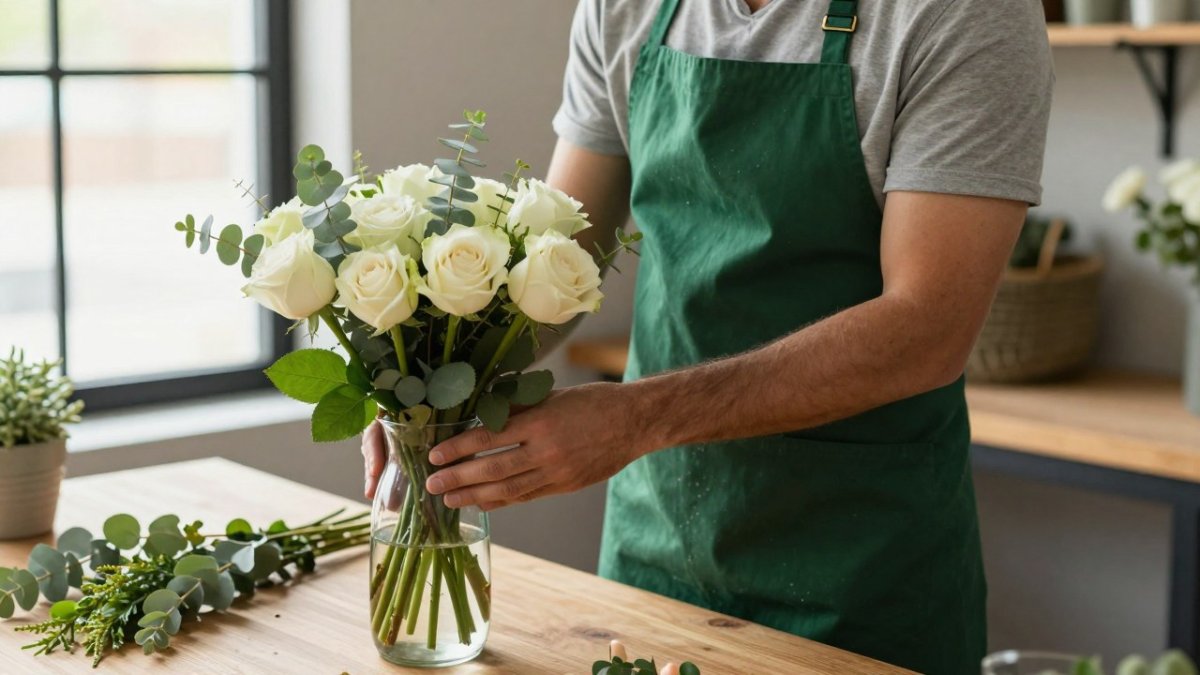
- All-white roses with eucalyptus for a classic, quiet look
- Soft lavender and cream mixed with greenery for a calm, tender feel
- White lilies as a centerpiece, with seasonal filler around them
- A simple mixed bouquet in muted pastels for a home delivery
- A cross or wreath form for a funeral service, using the same blooms
If you want a head start, a ready-made tribute like Heaven's Promise Sympathy Tribute™ gives you a proven design to build from.
The meaning of sympathy flowers and what each bloom says
Each bloom carries a long-standing meaning, and that meaning helps you choose with intention. White roses signal reverence and purity. Lilies, especially white ones, suggest restored innocence and peace. Chrysanthemums often stand for grief and remembrance. Carnations in white or pale pink convey lasting love.
Greenery matters too. Eucalyptus and ivy suggest memory and faithfulness. A simple ribbon in a muted tone finishes the design without pulling focus.
The meaning of sympathy flowers is not about superstition. It is about giving the family a quiet language when words fail. When you pick a bloom because it was the person's favorite, or because it matched their garden, the arrangement stops being decoration and becomes a message.
For a deeper look at which flowers suit which tributes, see our guide to the best flowers for sympathy.
How to make a sympathy flower arrangement step by step
Here is the full build, from supplies to finished arrangement. A beginner can complete this in about an hour, and the mechanics below are what keep the design looking calm instead of crowded.
What you'll need:
- A clean vase, basket, or wreath form
- Floral foam for structured designs, or floral tape and a tape grid for loose ones
- 8-12 stems of a main bloom, such as roses or lilies
- 4-6 stems of filler, such as baby's breath or waxflower
- 3-4 stems of greenery, such as eucalyptus or ruscus
- Sharp bypass shears, a ribbon, a sympathy card, and a small bucket for conditioning
Step 1: Condition the stems before you design. Fill a clean bucket with cool water and cut every stem at a 45-degree angle with sharp shears. Strip leaves that would sit below the water line, because submerged foliage rots and clouds the water.
Step 2: Prep the base. Fill the vase with cool water, or soak the foam until it is fully saturated and no dry core remains.
Step 3: Place the greenery first. Set greenery low and wide to frame the design. Work in odd numbers and turn the vase as you go so the silhouette stays even from every side.
Step 4: Add the main blooms. Group the main flowers in odd numbers and keep spacing even. Set the tallest bloom slightly off-center rather than dead center, which reads as more natural.
Step 5: Fill in with accents. Tuck filler between the main blooms, not on top of them. Filler should peek through, not cover.
Step 6: Check the shape. Turn the arrangement a quarter turn after every few stems. A design that only looks good from the front will look lopsided on a memorial table.
Step 7: Finish with ribbon and a card. Keep it simple. One ribbon, one note. Wrap the ribbon around the vase or tie it to the basket handle, and place the card where it can be read without moving the flowers.
Foam versus tape grid. Floral foam holds a structured, symmetrical shape and suits wreaths, crosses, and formal services. A tape grid suits loose, garden-style bouquets and lets you skip foam entirely.
Watch out: skipping the conditioning step or cutting stems blunt is the most common reason a homemade arrangement wilts within a day. Always cut at an angle, strip below-water leaves, and change the water daily.
For more hands-on guidance, read our tips on sending sympathy flowers with care.
Here is the nine-step build at a glance, from conditioning stems to finishing with ribbon and card.
| Step | What to do |
|---|---|
| 1 | Condition stems: cut at 45-degree angle, strip leaves, soak two hours |
| 2 | Prep the base with cool water, soaked foam, or a tape grid |
| 3 | Place greenery first, low and wide, in odd numbers |
| 4 | Add main blooms in odd numbers, tallest slightly off-center |
| 5 | Fill in with accents tucked between, not on top of, blooms |
| 6 | Check the shape by turning the arrangement a quarter turn |
| 7 | Finish with one ribbon and one card |
Choosing the color palette, size, and base for a condolence arrangement
Soft colors do the heavy lifting in a condolence arrangement. Whites, creams, pale pinks, and muted lavenders read as calm and respectful. Deep reds and bright yellows can feel celebratory, so save those for other occasions unless the family asks for them. If the person had a signature color, a single accent in that shade is a quiet way to personalize without breaking the calm palette.
Size should match the setting. A home delivery can be modest. A funeral service often calls for a larger piece that holds its own in a big room. When in doubt, ask the family or the funeral home what fits.
The base sets the tone as much as the flowers:
- Vase: best for home delivery and smaller tributes
- Basket: warm and traditional, good for family homes
- Wreath form: suited to funeral and memorial services
- Cross form: a formal, faith-based option
Budget and substitutions. Pricing depends on quantity, dates, and delivery. Check Flowers by Dena's website for current prices or request a quote. If a preferred flower is out of season or over budget, ask your florist about a substitution in the same color and shape family.
Keep the design shape simple. A rounded, structured design suits formal services. A looser, garden style feels gentler and more personal.
Personalizing with keepsakes, mementos, and a gentle note
A single personal detail turns a nice arrangement into a meaningful one. A small keepsake tucked into the design, a photo charm, or a ribbon in the person's favorite color all work. Keep it subtle so the flowers stay the focus.
A personal memento can be as simple as a sprig from the family's garden or a small object that belonged to the person. A candle beside the arrangement at a memorial service adds warmth.
The note matters most. Write it by hand if you can. A short condolence message that names the person and one memory will mean more than a long, formal card.
Sympathy flower card messages that sound sincere
Short and specific beats long and formal. Name the person, share one memory or quality, and offer real support. Skip clichés and keep it gentle.
Sympathy flower card messages that work:
- "Thinking of you and your family. [Name]'s kindness will stay with us."
- "With deep sympathy. [Name] made every room brighter."
- "Our hearts are with you. We are here if you need anything."
- "In loving memory of [Name]. With sincere condolences."
Sign your full name so the family knows who sent the tribute. If you are sending on behalf of a group, list the names.
Ordering a custom sympathy tribute from Flowers by Dena
When you want a truly personal design, working with a local florist makes the difference. At Flowers by Dena, we design each sympathy tribute by hand and deliver it with care. We have served the community since 2012, and we have a 4.9-star rating from 5,816 happy customers.
Here is what you get:
- 100% florist-designed arrangements
- Free same-day delivery in the local area
- A personal touch with Florist's Choice options
When you are ready, you can order sympathy tributes for local funerals or order custom flowers for delivery.
Losing someone is hard, and getting the tribute right should not add stress. Flowers by Dena designs each sympathy arrangement by hand, delivers it the same day locally, and helps you choose blooms and a message that truly fit the person you are honoring. Get started with Flowers by Dena and send a tribute that feels personal and sincere.
Frequently Asked Questions
What is the 3:5:8 rule for bouquets?
The 3:5:8 rule is a proportion guide for building a balanced bouquet: three parts of one flower type, five parts of a filler or secondary flower, and eight parts of greenery. Applied to sympathy bouquets, it keeps the arrangement calm and structured instead of crowded. For example, pair three white roses with five stems of soft pink spray roses and eight stems of eucalyptus or salal. Adjust the ratio to the size of your vase, but keep the greenery share the largest so the design stays gentle.
Which flowers are appropriate for a sympathy bouquet?
White lilies, roses, carnations, chrysanthemums, and orchids are common choices because they carry calm, respectful symbolism. Soft pinks, lavenders, and muted greens work well too. Avoid bright tropicals or novelty-dyed blooms unless the family specifically loved them. If a favorite flower is out of season, ask your florist about a substitution that keeps the same color and feel, and mention the swap on the card so the family knows the thought behind it.
What should I write on a sympathy flower card?
Keep it short, warm, and specific. Name the person you are remembering, offer one concrete memory or offer of help, and sign your full name. For example: "Thinking of you and your family. I'll always remember Sunday dinners with Eleanor. I'm here if you need anything. With love, Maria." Avoid phrases like "at least" or comments about the death being for the best. If you did not know the deceased, speak to your support for the family instead.
Can I design my own sympathy bouquet online for free?
Many florists let you browse styles and request a custom design online, but a truly personalized sympathy bouquet usually involves a short conversation about the family's preferences, faith, and the service setting. A local florist such as Flowers by Dena can help you choose a tribute and deliver it. That conversation is often what keeps the arrangement from looking generic.