 Ultimate guide
Best Flowers for Sympathy: Meanings and Choices Guide
Last Updated: November 19, 2026
Quick Summary
The best sympathy flowers are soft, dignified blooms such as white lilies, roses, and chrysanthemums, chosen to fit the relationship and setting. White and cream read as respectful and neutral, while soft pastels suit close friends and family homes. Avoid strong scents and lilies in homes with cats.
- White lilies signal peace and the hope of rest after a long struggle.
- Lily pollen can stain clothing and furniture, so handle lily arrangements with care.
- Choose white or white-and-green for coworkers and acquaintances to stay respectful.
- Send funeral arrangements to arrive before the first visitation, not the morning of the service.
- Lilies are dangerous to cats, and fragrance-free blooms work best in shared living spaces.
Table of Contents
- Why Flower Choice Matters in Sympathy Tributes
- Sympathy Flowers and Their Meanings
- What Color Flowers to Send After the Death of a Loved One
- Sympathy Flower Etiquette: Where to Send, What to Write and When
- Unique Sympathy Flower Ideas Beyond the Traditional Arrangement
- Cultural, Religious and Safety Considerations
- Booking Your Sympathy Arrangement With Flowers by Dena
- Frequently Asked Questions
Why Flower Choice Matters in Sympathy Tributes
Choosing sympathy flowers is one of the few gestures that speaks before a single word is read.
Many people worry a flower carries the wrong meaning or want something that lasts beyond the service.
Sympathy flowers also serve a practical purpose: a funeral spray or standing arrangement gives a room dignity, and a plant or planter can remain in a home long after the service.
Sympathy Flowers and Their Meanings
Traditional sympathy flowers carry symbolism developed over generations. Most florists work from the same core meanings: white for purity and peace, pink for gentle admiration, and red for deep love or respect.
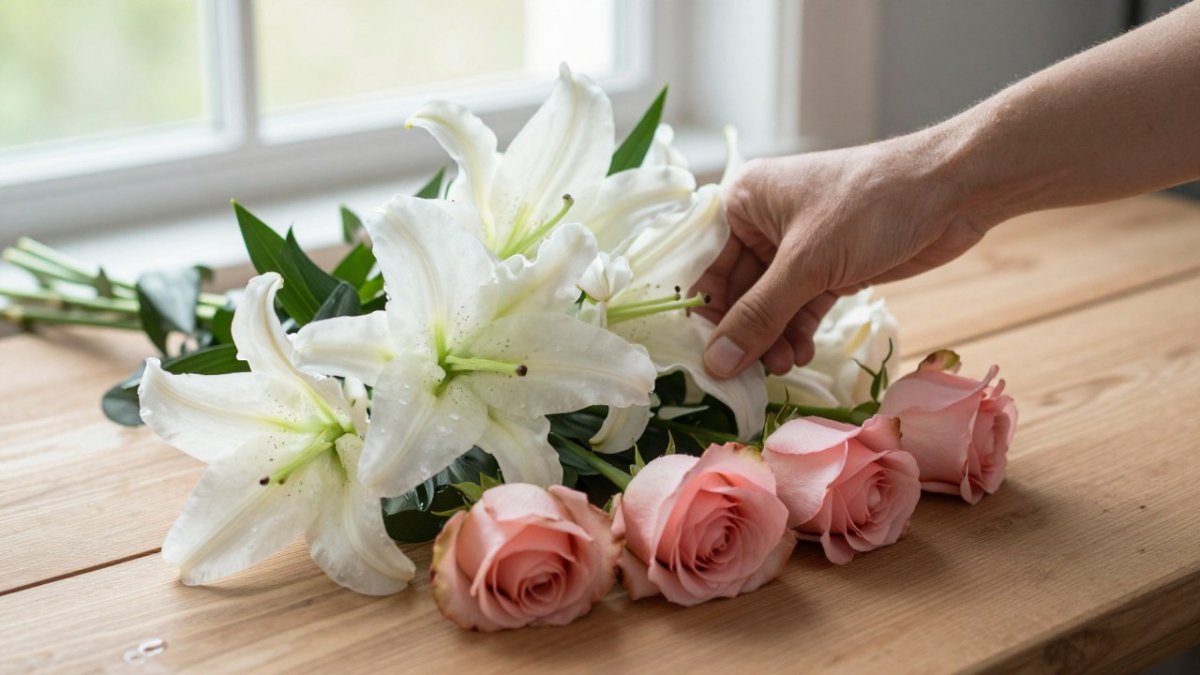
Meanings shift by region and culture, so treat these associations as a guide rather than a rule. When in doubt, a simple arrangement of white or soft-colored blooms is almost always appropriate.
Lilies and Peace
Lilies are among the most common sympathy flowers, and they are closely linked with peace, renewal, and remembrance. White lilies in particular signal the hope of rest after a long struggle.
One practical note: lilies release pollen that can stain clothing and furniture. Lily pollen and plant care guidance
You can order lily flower arrangements from Lily Arrangements in Swedesboro when you want a classic peace-themed tribute.
Roses, Carnations and Chrysanthemums
Roses express love and respect, and their meaning changes with color: white suggests reverence, while deep red signals strong affection.
Carnations are long-lasting and are used in memorial settings. Chrysanthemums, especially white ones, are associated with grief and remembrance in many cultures.
For a classic rose tribute, consider rose flower delivery in Swedesboro, where you can see arrangements suited to a funeral or a family home.
What Color Flowers to Send After the Death of a Loved One
Color shapes how an arrangement feels in a room. Soft whites, creams, and pale pinks are the safest choices because they read as calm and respectful. Bright, bold colors can feel celebratory, which may not suit a grieving household.
The more useful question is not "which color is correct" but "which color fits this relationship and this setting." A white lily spray from a close family member to a funeral home carries different weight than a soft pastel bouquet from a coworker to a home two weeks after the service.
Color by Relationship
- Spouse or partner: White and cream mixed with soft pink or lavender reads as tender and personal without feeling festive. Deep red is sometimes chosen to signal lasting love, but confirm the family's preferences first, since some households associate red with celebration.
- Parent, child, or sibling: White and green arrangements are the most common choice because they feel dignified and neutral. A touch of pale yellow can suggest warmth and remembrance.
- Close friend: Soft mixed pastels, pink, peach, lavender, light yellow, work well and feel less formal than an all-white spray.
Color by Setting
- Funeral home or church service: White, cream, and green dominate because they photograph well, hold up under warm lighting, and read as formal. Standing sprays and casket pieces are almost always built in these tones.
- Family residence after the service: Softer, warmer palettes are welcome here. Pale pink, peach, and lavender arrangements feel like comfort rather than ceremony, and they brighten a room the family is actually living in.
- Memorial or celebration-of-life event: This is the one setting where brighter colors are often appropriate. If the family has asked for a celebration of life, yellow, coral, and mixed brights can reflect the person's personality rather than mourn the loss.
When the Family Has Stated a Preference
Some families ask for specific colors or have traditions favoring certain palettes. A short call to the funeral home can clarify expectations before you order. If the obituary says "in lieu of flowers" or requests a particular color, follow that instruction exactly.
Colors to Approach Carefully
- All red: Can read as romantic or celebratory depending on the arrangement. Fine for a spouse, riskier for a coworker.
- All yellow: Cheerful and warm, but some families read it as too light for a funeral service. Better for a home delivery or a celebration of life.
- Orange and bright purple: Bold and modern; usually better suited to a memorial event than a traditional visitation.
Sympathy Flower Etiquette: Where to Send, What to Write and When
Knowing where to send flowers matters as much as what to send. Funeral arrangements usually go to the funeral home or church, and the funeral director can confirm the address and timing. Flowers sent to a residence suit the days after the service, when the family is home.
Where to Send: Funeral Home, Church, or Home
- Funeral home: Send the arrangement to arrive before the first visitation period, not the morning of the funeral.
- Church or house of worship: Confirm whether the church accepts deliveries directly or whether flowers must arrive through the funeral home. Some congregations have rules about where arrangements can be placed.
- Family residence: Best for the days after the service. Send to the home address listed in the obituary, and confirm that someone will be there to receive the delivery.
Watch out: sending flowers to the family's home during the week of the service often means no one is there to receive them; confirm the delivery window with the recipient or the funeral home first.
What to Write on the Card
Your card should be brief and sincere. A simple line such as "With deepest sympathy" or a short memory of the person who died is more meaningful than a long message.
Useful card formats that work in most situations:
- Close family or friend: "With love and deepest sympathy. [Name] will be remembered always."
- Coworker or acquaintance: "With sincere condolences from all of us at [company]."
- Neighbor or community member: "Thinking of your family during this difficult time."
Sign with your full name and, if relevant, your relationship ("your neighbor on Elm Street," "[Name]'s college roommate"). The family may receive dozens of cards, and the signature is what helps them place the gesture.
When to Send
Timing counts too. Sending before the service shows support during the visitation, while sending after the funeral brings comfort in the weeks that follow. Many families receive so many arrangements at once that a thoughtful later gesture stands out.
A practical timeline:
- As soon as the service date is announced: Order the funeral or visitation arrangement. Aim for delivery at least one day before the first viewing.
- Within one to two weeks after the service: Send a home arrangement, plant, or meal delivery. This is when the family is often alone with their grief and the earlier tributes have faded.
- One month and beyond: A card, a donation, or a small plant can be more meaningful than another large arrangement.
Same-day delivery is available in the Swedesboro area, but order early when a service date is set.
The Ordering and Delivery Checklist
Before you order, have these details ready. Missing any one of them is the most common reason a sympathy delivery goes wrong.
- Recipient name: The name of the deceased, not just the family's surname, so the florist can match the arrangement to the service.
- Delivery address: The funeral home, church, or residence, including the name of the venue and any room or chapel number.
- Service date and time: The first viewing or service time, not the burial time, unless you are ordering a graveside piece.
If the service information is uncertain, call the funeral home and ask for the florist liaison or arrangement coordinator. If you still cannot confirm the details, send to the family's home address instead, a home delivery is rarely wrong and is always appreciated.
Sympathy Flowers Versus Condolence Flowers
A useful distinction: sympathy flowers are sent to the service or the funeral home, while condolence flowers are sent to the family's home in the days and weeks after the death. Sympathy flowers help create a dignified setting for the service; condolence flowers provide comfort in the quieter period that follows.
The article breaks down when to send each kind of tribute, so this table lines up timing with the right gesture.
| Timing | Gesture | Where it goes |
|---|---|---|
| As soon as the service date is announced | Funeral or visitation arrangement | Funeral home or church, arriving a day before the first viewing |
| Within one to two weeks after the service | Home arrangement, plant or meal delivery | Family residence |
| One month and beyond | Card, donation or small plant | Family residence or in the person's name |
Unique Sympathy Flower Ideas Beyond the Traditional Arrangement
Not every tribute needs to be a traditional bouquet. Some families prefer something that lasts or feels more personal than cut flowers. Blooming plants can remain in a home for weeks and serve as a daily reminder of care.
The Stargazer Sympathies Cross™ offers a distinctive, non-traditional option for a funeral setting, and the Sweet Memories Sympathy Planter™ gives a family a lasting plant to keep. You can explore the Stargazer Sympathies Cross™ or the Sweet Memories Sympathy Planter™ to see which fits the occasion.
When choosing an alternative, think about what the family will do with the gift. A plant needs watering and light, while a cross or memorial piece may be displayed at the service or kept as a keepsake.
Cultural, Religious and Safety Considerations
Sympathy customs vary widely. Some faiths restrict floral tributes during certain mourning periods, and others expect them at every service.
Safety matters too. Lilies are dangerous to cats, and certain bulbs can cause illness if eaten (Which Lilies Are Toxic to Pets?).
When flowers are not suitable, a thoughtful alternative can still express sympathy.
For families who have lost a pet, a dedicated option may feel more fitting. You can browse pet sympathy flower delivery in Swedesboro for arrangements designed for that loss.
Booking Your Sympathy Arrangement With Flowers by Dena
Ordering a sympathy arrangement is straightforward when you have the details ready. Confirm the recipient's name, the delivery address (funeral home, church, or residence), the service date and time, and any color or flower preferences the family has shared.
Pricing depends on the arrangement size, flower selection, and delivery timing, so the most accurate figure will come from our current catalog or a direct quote.
Flowers by Dena has served Swedesboro since 2012, hand-delivering arrangements. We are glad to answer questions before you commit.
Frequently Asked Questions
What are the best flowers to send in sympathy when someone dies?
Lilies, roses, carnations, chrysanthemums and orchids are among the most common and appropriate sympathy flowers. White lilies signal peace and remembrance, while roses in soft colors express respect and love. Carnations and chrysanthemums are sturdy, long-lasting choices that suit funeral sprays and wreaths. Choose flowers based on the family's preferences, the setting and your relationship to the person who died. Pricing varies by size and design, so check current options and quotes directly with Flowers by Dena before ordering.
What flower symbolizes grief and loss?
White lilies are widely associated with the restoration of the soul and remembrance, which is why they appear so often in funeral arrangements. Calla lilies carry a similar meaning of reverence. Purple flowers, such as some orchids and irises, are also used to express sorrow and grief in many traditions. Because symbolism can vary by family and region, a short conversation with the family or funeral home is the surest way to choose a flower that will feel meaningful.
Should sympathy flowers be sent to the funeral or the family's home?
Sympathy flowers are typically sent to the funeral home or the service location when a service is being held, so they can be displayed during visitation or the service. If there is no service or the family has asked for flowers at home, sending them to the residence is appropriate. Check the obituary for service details and any family requests, such as a preference for donations instead of flowers. Delivery timing matters, so ordering a few days before the service is a practical choice.
Are there flowers that are considered inappropriate for sympathy?
Bright, festive arrangements with balloons, novelty items or very bold colors can feel out of place at a funeral. Some families also prefer to avoid heavily scented flowers or those that may trigger allergies, so it helps to keep arrangements simple. When in doubt, choose white or soft-toned flowers and avoid anything that reads as celebratory. If the family has requested no flowers, a donation or a sympathy card is a respectful alternative.