 How-to
Custom Floral Decor for Events: A Complete Planning Guide
Last Updated: November 17, 2026
Quick Summary
Custom floral decor is the practice of designing arrangements, installations, and complementary styling around a specific celebration rather than pulling pre-made pieces off a shelf. It sets the emotional register of an event before guests read a place card, so lock a two-to-three-color palette and layer table-level pieces, eye-level accents, and one focal installation.
- Lock a palette of two or three colors plus one neutral before choosing a single bloom.
- Layer three tiers: table-level pieces, eye-level accents, and one focal installation.
- Hold 10 to 15 percent of the total decor budget in contingency for changes.
- Spring events open up tulips, ranunculus, and lilac; summer brings dahlias, sunflowers, and zinnias.
- Confirm venue access, setup windows, and rigging rules in writing before designs are final.
Table of Contents
- Why Custom Floral Design Sets the Tone for Your Event
- Matching Flowers to Your Event Theme and Color Palette
- Floral Decor Ideas for Events: From Centerpieces to Statement Installations
- Vessels, Linens, and Complementary Decor That Complete the Look
- Planning Your Floral Budget and Understanding What Drives Cost
- Seasonal Flower Selection and Post-Event Reuse
- Venue Logistics and Installation Planning for Custom Floral Decor
- Request a Custom Floral Design Consultation
- Frequently Asked Questions
Why Custom Floral Design Sets the Tone for Your Event
Custom floral decor for events is the practice of designing arrangements, installations, and complementary styling around a specific celebration rather than pulling pre-made pieces off a shelf. The difference between stock arrangements and custom floral decor shows up in the first thirty seconds a guest walks in.
Here is what most guides get wrong: they treat flowers as decoration added at the end of planning. In practice, event florals set the emotional register before anyone reads a place card. A tight, monochromatic palette reads as formal. Loose, garden-style blooms signal relaxed. Height and scale tell guests where to look and where to gather.
Below, we walk through how to match flowers to a theme, plan a realistic budget, choose in-season stems, and coordinate installation so everything arrives looking intentional.
Matching Flowers to Your Event Theme and Color Palette
The fastest way to make an event look designed rather than decorated is to lock a color palette before choosing a single bloom. Pick two or three colors and one neutral, then hold that line across every arrangement, linen, and vessel.
Your theme should drive texture as much as color. A black-tie reception calls for structured blooms like roses and orchids in compotes and urns. A garden party suits loose, trailing stems in low bowls. Brand activations often need a tighter, more graphic look that photographs well under event lighting.
Browse color options to see how specific palettes translate into real arrangements before you commit. A common mistake is choosing flowers from photos without checking how they read against your venue's walls and lighting. Warm ivory blooms disappear against cream draping; deep burgundy pops.
Floral Decor Ideas for Events: From Centerpieces to Statement Installations
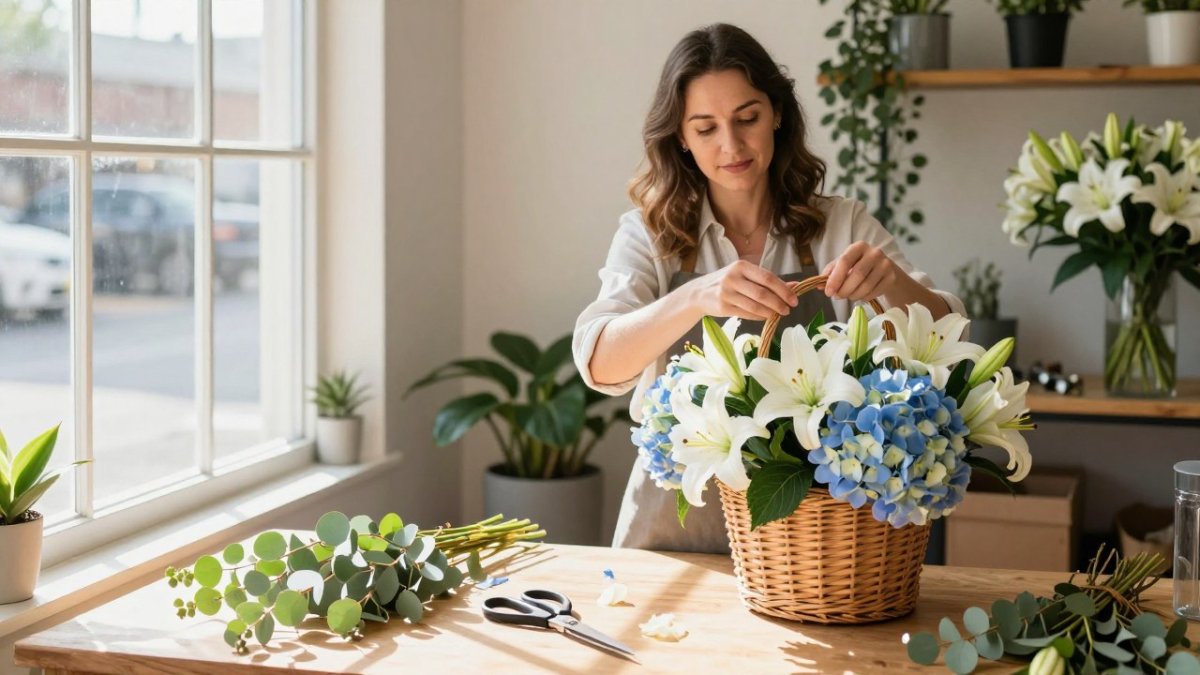
Custom floral decor ideas for events range from low table arrangements to ceiling installations, and the right mix depends on how guests move through the space. Most successful events layer three tiers: table-level pieces, eye-level accents, and one focal installation.
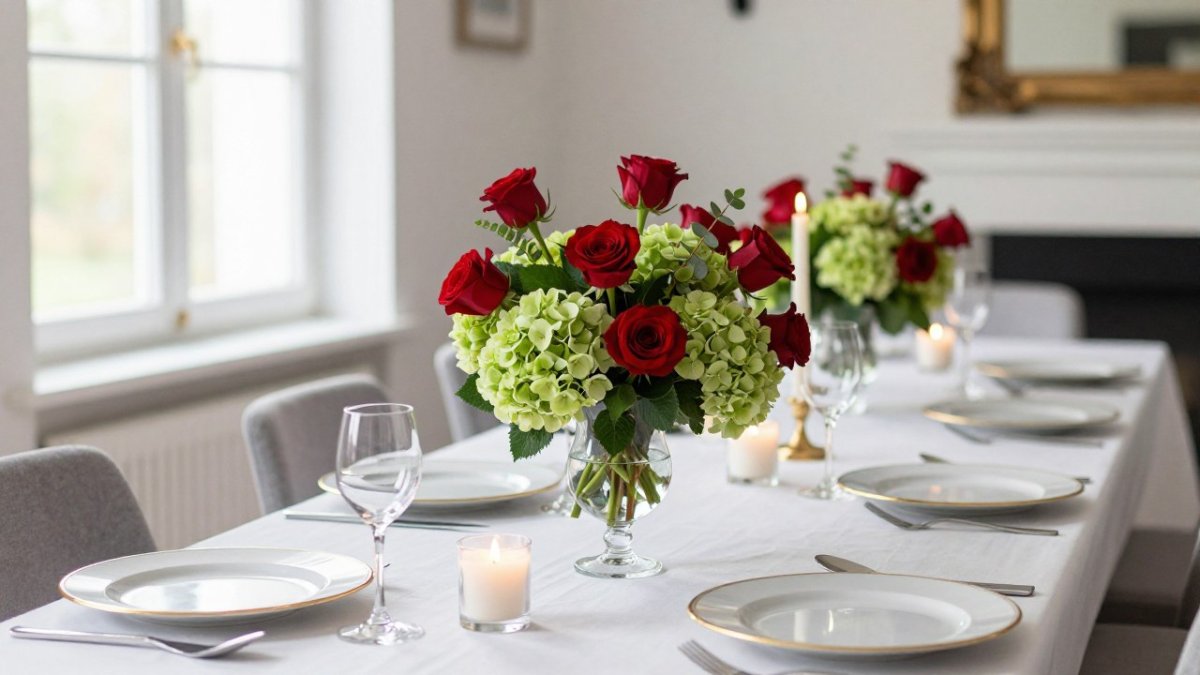
Table arrangements do the close-up work. Low compotes and bowls keep sightlines open for conversation. Tall urns create drama but should sit off the main seating run so guests are not craning around stems.
Bud vases earn their place in clusters along bars, escort-card tables, and cocktail ledges. They cost less per unit and fill visual gaps that a single large piece cannot reach.
Vessels, Linens, and Complementary Decor That Complete the Look
Vessels are the most overlooked design decision in event florals, and they change the entire read of an arrangement. The same roses look modern in a matte ceramic trough and traditional in a footed urn.
Match the vessel to the arrangement's job:
- Compotes and bowls: low centerpieces, dining tables
- Urns: tall entry pieces and ceremony focal points
- Troughs: long banquet tables and bar tops
- Bud vases and pots: clustered accents and cocktail areas
Linens and fabrics set the base tone. A textured linen in a neutral shade lets a bold palette carry the room; a colored linen demands simpler flowers. Coordinate these early, because fabric choices affect how floral colors read under lighting.
Lighting and accessories finish the picture. Candles, votives, and subtle uplighting make arrangements look richer in photographs and after dark.
Planning Your Floral Budget and Understanding What Drives Cost
Floral pricing depends on stem count, bloom type, season, vessel choice, and installation labor, so any quote should be built from those inputs rather than a flat package number. Event pricing depends on quantity, dates, and delivery details, so it is best confirmed with Flowers by Dena directly.
Start with a total decor budget, then split it into four line items: flowers and hard goods, vessels and rentals, labor (design, delivery, installation, strike), and contingency. A common pattern among event planners is to hold 10 to 15 percent of the total in contingency for stem substitutions, extra tables, or a last-minute addition. That reserve is what keeps a budget from overrunning when the guest count shifts.
Within the floral line, allocate by visual priority rather than evenly across tables. Guests remember the room's anchor and their own table; spreading the same money evenly across every surface usually reads as flat.
What drives cost up, in order of impact:
- Stem type. Imported or out-of-season blooms cost far more than local, in-season stems.
- Scale and count. More tables mean more centerpieces, and installations add labor.
- Vessels. Rental versus purchase changes the line item significantly. Rentals lower upfront cost but add handling and return logistics; purchase gives you pieces to reuse or resell but ties up budget.
- Installation and strike. Delivery, setup time, and teardown are real costs, especially for suspended or arch pieces that require rigging, lifts, or extra crew.
Ask for an itemized quote that separates stems, hard goods, rentals, labor, and tax so you can see where the money goes and adjust without guesswork.
Explore premium flower arrangements to understand the upper tier of what event florals can look like, and review flowers over $80 if you are budgeting for statement pieces. For current pricing on any specific design, contact us for a quote.
Watch out: a verbal estimate without a written stem-and-labor breakdown is where event budgets quietly overrun, because there is no line to cut when costs rise.
Four inputs drive floral cost, and they are worth reviewing in order of impact before you request a quote.
| Cost driver | Why it raises cost |
|---|---|
| Stem type | Imported or out-of-season blooms cost far more than local, in-season stems |
| Scale and count | More tables mean more centerpieces, and installations add labor |
| Vessels | Rental versus purchase changes the line item significantly |
| Installation and strike | Delivery, setup time, and teardown are real costs |
Seasonal Flower Selection and Post-Event Reuse
Choosing in-season flowers lowers cost and improves quality, because stems travel shorter distances and arrive fresher. Spring events open up tulips, ranunculus, and lilac. Summer brings dahlias, sunflowers, and zinnias. Fall favors dahlias, chrysanthemums, and textural branches. Winter leans on amaryllis, evergreens, and forced bulbs.
seasonal flower availability guidance from the USDA is a useful reference for what is genuinely in season versus what is merely available at a premium.
Post-event reuse is where thoughtful planning pays off. Plan ahead for what happens to the flowers after the last guest leaves:
- Send centerpieces home with guests as favors
- Donate arrangements to hospitals, care centers, or community spaces
- Repurpose ceremony pieces into reception accents
- Compost what cannot be reused through your venue's waste program
Browse spring flower delivery to see the current seasonal selection if your event falls in that window.
Venue Logistics and Installation Planning for Custom Floral Decor
Installation timing is the detail that separates a calm setup from a frantic one, and it should be confirmed with the venue before designs are final. Ask three questions early: when can vendors access the space, how long is the setup window, and are there restrictions on hanging, rigging, or open flame. Get the answers in writing, because the answers shape which designs are even buildable.
Build a simple installation timeline:
- Confirm access and load-in. Get the window in writing, including dock access, elevator reservations, and any certificate-of-insurance requirement the venue imposes on vendors.
- Deliver hard goods first. Vessels, linens, and structures go in before any perishable stem, so flowers spend as little time out of water as possible.
- Install focal pieces. Arches and suspended work need the most time and usually require a second crew member or a lift; confirm ceiling attachment points and weight limits with the venue before the day of.
- Place table arrangements last. They go in after linens and place settings, so they are not moved twice.
- Schedule strike. Confirm teardown and removal the same night or next morning, and ask whether the venue charges for after-hours access.
Transport is its own constraint. Tall urns and suspended pieces often do not fit through standard doors or in a passenger vehicle, so confirm vehicle size and door clearances during the site visit. A common pattern is to build large installations on site in sections rather than transporting them assembled.
Coordinate with your caterer and lighting team so florals are not installed before the room is ready. A common mistake is scheduling floral setup before tables are set, which forces rework and can crush low arrangements. If the venue hosts multiple events in one day, ask for the flip window and plan floral install after the previous event's strike, not during it.
Watch out: a venue that allows hanging florals but requires a licensed rigger will add both cost and scheduling lead time, so confirm rigging rules before the design is approved.
Request a Custom Floral Design Consultation
The best custom floral decor starts with a conversation about your room, your palette, and your budget, not a catalog page.
Flowers by Dena has served Swedesboro and the surrounding townships since 2012, with 100% florist-designed and hand-delivered arrangements and free same-day delivery in the local area.
Ready to start? Order custom flower arrangements designed for your event.
Your event deserves flowers that look like they belong in the room, not pulled from a shelf. Flowers by Dena designs every arrangement by hand, delivers same-day across the local area, and offers a florist's choice option when you want expert direction. Get started with Flowers by Dena and give your guests a room they remember walking into.
Frequently Asked Questions
How much does custom floral decor for an event cost?
Custom floral decor pricing depends on the number of arrangements, flower types, vessel choices, and delivery logistics. Larger installations and premium blooms like peonies or garden roses cost more than seasonal options. Event pricing depends on quantity, dates, and delivery details. Visit the Flowers by Dena website or contact the business for a current quote.
How far in advance should I book an event florist for custom floral decor?
Same-day delivery is available in the Swedesboro, NJ area. For event florals, contact Flowers by Dena to discuss your date and requirements.
Can event floral arrangements be reused or repurposed during the event?
Flowers can often be reused after an event, depending on the arrangement and how it is planned. Ask Flowers by Dena about your specific design.
What flowers work best for event decorations?
The best flowers depend on your theme, color palette, and season. Roses, hydrangeas, and orchids offer classic elegance, while dahlias and sunflowers bring seasonal charm. For longevity, choose sturdy blooms like carnations or chrysanthemums. Ask a local florist such as Flowers by Dena about in-season options that fit your style.