 Listicle
7 Real Benefits of Buying Flowers Locally in 2026
Table of Contents
- 1. Fresher Blooms and a Longer Vase Life
- 2. Seasonal Flowers Grown for Your Region
- 3. Greater Variety and Distinctive Blooms
- 4. Shorter Supply Chains and a Smaller Carbon Footprint
- 5. Money That Stays in the Local Economy
- 6. How to Choose a Florist You Can Trust
- 7. Flower Freshness and Care: Making Local Blooms Last
- The Trade-Offs of Buying Flowers Locally
- Frequently Asked Questions
Last Updated: October 19, 2026
1. Fresher Blooms and a Longer Vase Life
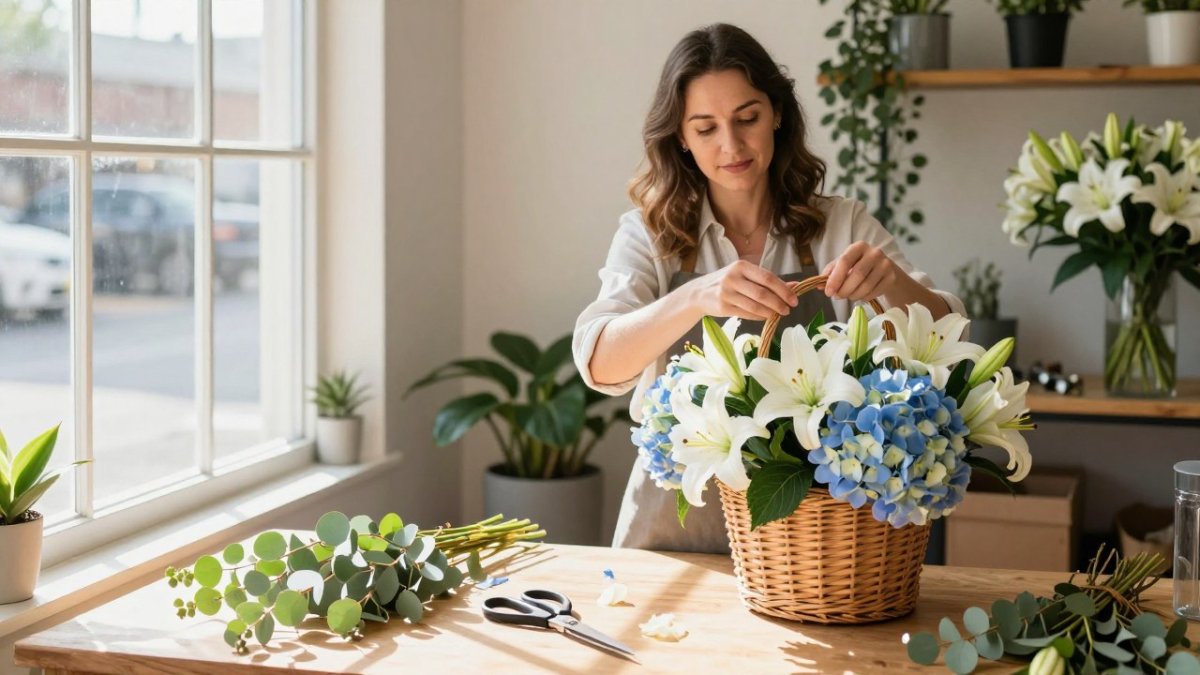
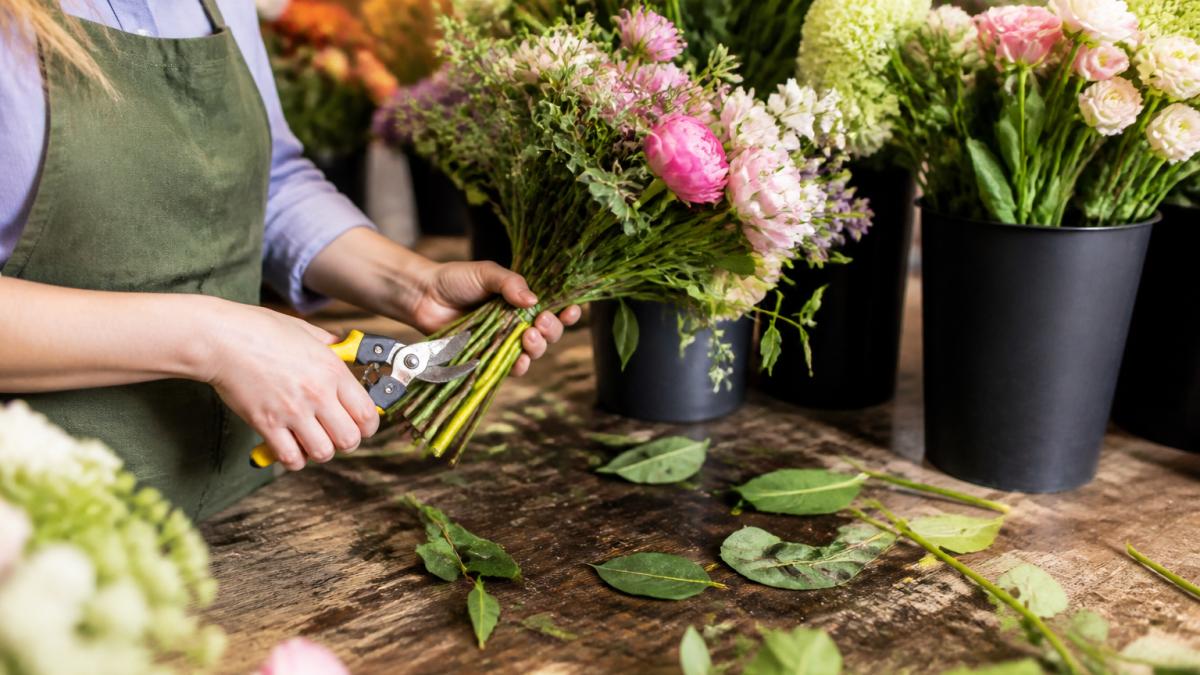
Freshly cut flowers last longer because they spend less time in transit, storage, and wholesale warehouses before reaching your hands. Most imported stems are cut days or even weeks before they're sold, while local stems often go from field to vase in a fraction of that time.
At Flowers by Dena, we've hand-delivered arrangements across the area since 2012, and the difference is visible. That freshness translates directly into vase life. The USDA's guidance on cut flower care notes that proper post-harvest handling is one of the biggest factors in how long blooms last, and local sourcing shortens the gap between harvest and delivery.
Harvest timing matters too. Growers who sell locally can cut at the right moment for the variety, not days early to survive a long shipping window. If you're buying flowers locally, you're often buying blooms that were cut this week, not last month.
2. Seasonal Flowers Grown for Your Region
Seasonal flowers grown for your region simply perform better in your climate because they were raised in it. A stem that thrived through your local growing conditions is already adapted to the temperature and humidity it will live in on your table.
Regional growing conditions shape what's available and when. Spring brings tulips, daffodils, and peonies. Summer favors sunflowers, zinnias, and dahlias. Fall leans on mums, dahlias, and ornamental grasses. Winter offers amaryllis, evergreens, and forced bulbs. Buying with the season means fresher stems and often better value.
Seasonal selection also supports local agriculture. When you buy what's growing nearby, you're working with the rhythm of local flower growers rather than fighting it. That's one of the quieter benefits of buying flowers locally: the arrangement fits the moment.
3. Greater Variety and Distinctive Blooms
Local growers often carry distinctive varieties that never survive the wholesale supply chain. Heirloom dahlias, unusual ranunculus, fragrant garden roses, and specialty foliage are the kinds of blooms that show up at a farmers market but rarely in a mass-market cooler.
The reason is practical. Large-scale distribution favors flowers that ship well and hold up in a box, which narrows the field to a handful of commercial varieties. Local flower growers can grow what looks and smells best, because the flowers don't need to survive a week in transit.
That variety lets a florist build something you won't see everywhere. If you want an arrangement that feels like yours rather than a catalog photo, local sourcing is where that starts.
4. Shorter Supply Chains and a Smaller Carbon Footprint
Shorter supply chains mean fewer miles, fewer middlemen, and a smaller carbon footprint. A locally sourced bouquet may travel across town, while an imported one can cross oceans and continents before it reaches a cooler.
Transport distance is the clearest environmental difference. The EPA's overview of greenhouse gas emissions from transportation explains that moving goods long distances adds greenhouse gas emissions at every leg of the trip. Air-freighted flowers carry a particularly heavy footprint because air transport is emissions-intensive per unit of weight.
Sustainable flower production is about more than miles, though. Growing practices, chemical use, pesticide use, and water inputs all matter. Ask your florist how their growers work; the answer tells you more than any label.
5. Money That Stays in the Local Economy
Money spent with a local florist stays in the local economy in a way that online orders rarely do. Local businesses pay local rent, hire local staff, and often buy from nearby suppliers, so each purchase circulates through the community.
The economic impact adds up across many small transactions. When residents support local growers and local florists, they keep small businesses viable, and those businesses in turn sponsor local events, donate to causes, and employ neighbors. That's a real benefit of buying flowers locally that doesn't show up in the vase.
There's a practical side, too. A local shop can answer the phone, adjust an order, and fix a problem the same day. That responsiveness is hard to get from a call center handling orders for the whole country.
Order fresh birthday, sympathy & wedding flowers today →
6. How to Choose a Florist You Can Trust
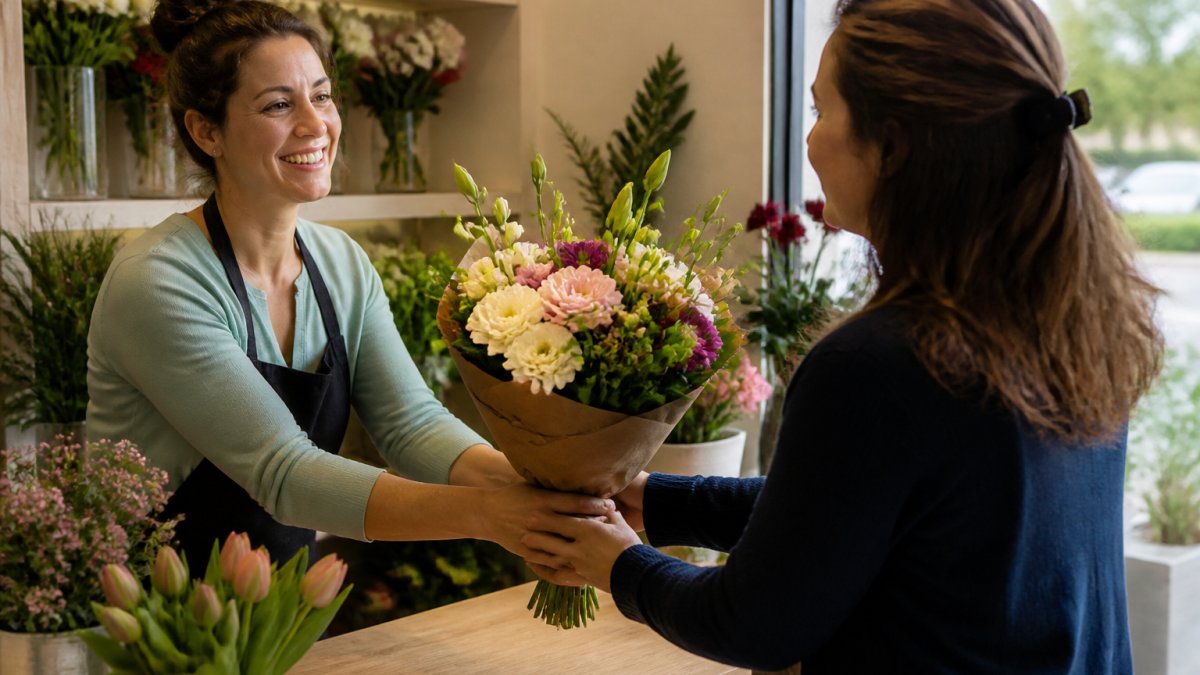
Choosing a florist you can trust comes down to transparency, communication, and a track record you can verify. The right shop will answer direct questions about sourcing, timing, and pricing without dodging.
Start with how they handle orders. A reliable florist confirms delivery windows, explains any fees up front, and tells you honestly if same-day delivery is possible for your address. Vague answers about timing are a warning sign.
Questions to Ask When Ordering Flowers
Use these questions when ordering flowers to separate a dependable shop from a risky one:
- When were these stems cut, and where did they come from?
- Is same-day delivery available for my specific address, and by what time?
- Are there any delivery, service, or relay fees I should expect?
- Can you send a photo of the finished arrangement before delivery?
- What's your policy if the flowers arrive damaged or wilted?
- Do you work with families on custom sympathy designs?
- Can I order online if I'm out of the area and have it delivered to a local address?
A florist who welcomes these questions is usually the one worth your business. At Flowers by Dena, we've built our reputation on answering them plainly, with 4.9 stars from 5,816 happy customers and free same-day delivery in the Swedesboro, NJ area.
7. Flower Freshness and Care: Making Local Blooms Last
Flower freshness and care determine how long your arrangement looks its best, no matter how good the stems were at purchase. A few simple habits add days to almost any bouquet.
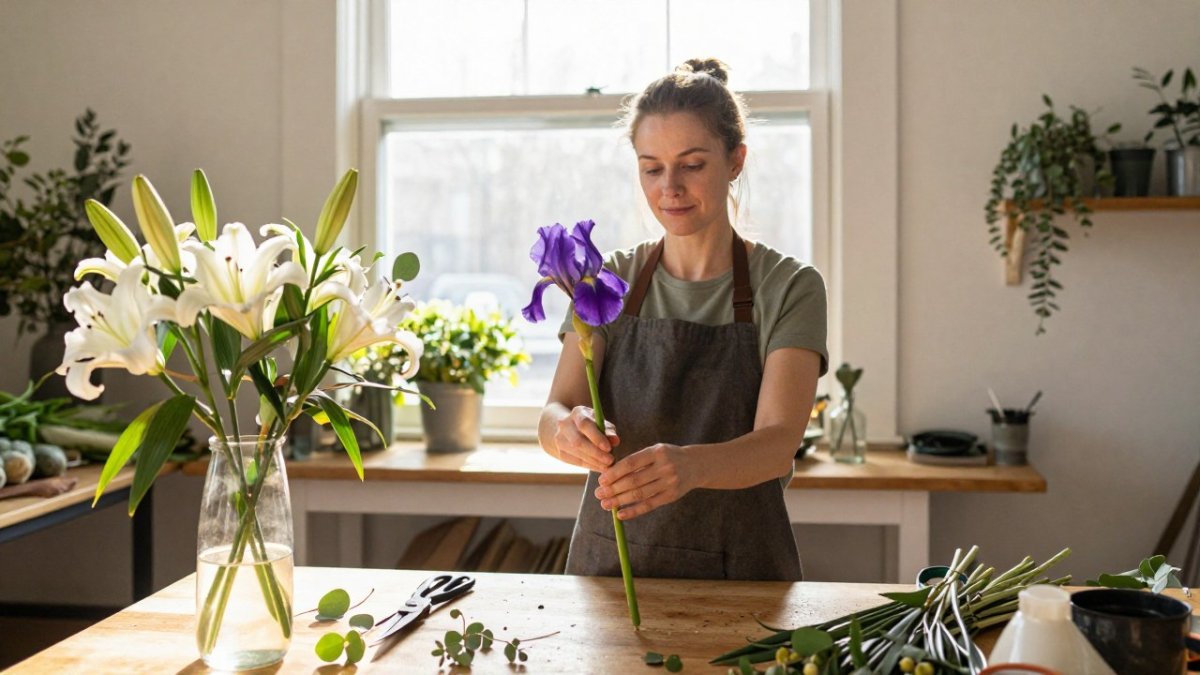
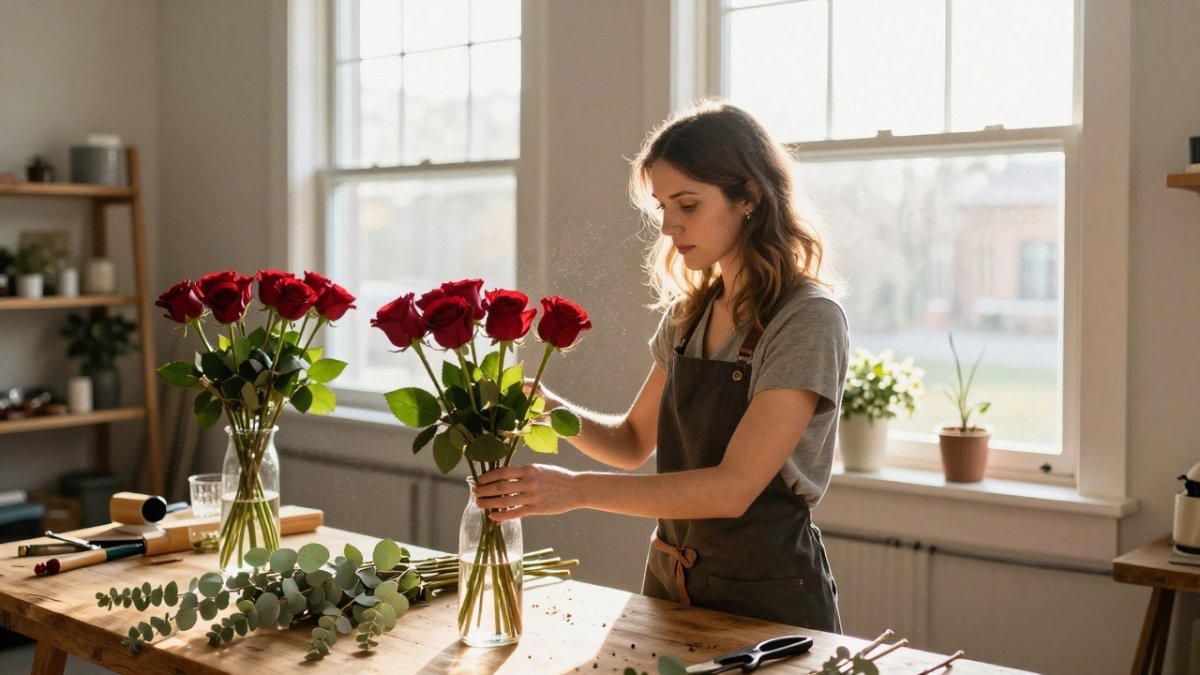
Start with a clean vase and fresh water. Trim the stems at an angle with a sharp knife or shears, removing the bottom inch or two, and strip any leaves that would sit below the waterline. Change the water every day or two and re-trim the stems each time. Keep the arrangement out of direct sun, away from heating vents, and away from ripening fruit, which releases ethylene gas that speeds wilting.
The University of Illinois Extension's guide to cut flower care recommends cool water and regular stem trimming as core habits for longer-lasting blooms. For local flowers, that care pays off even more, because you're starting with fresher stems that respond well to a little attention.
The Trade-Offs of Buying Flowers Locally
Buying flowers locally has real trade-offs, and honesty about them builds better decisions. The biggest is availability: local shops carry what's in season and in stock, so a specific out-of-season bloom may not be possible on short notice.
Price can be another factor. Local, hand-designed arrangements sometimes cost more than mass-market bundles, because you're paying for design skill, fresher stems, and personal service. Pricing depends on the arrangement, the season, and delivery, so ask for a quote rather than assuming.
Ordering options matter, too. If you're out of the area, confirm that the shop accepts online orders and delivers to the address you need. The right local florist makes that easy, and the freshness, variety, and community benefits usually outweigh the limits.
Frequently Asked Questions
Are flowers from a local florist fresher than those from a national website?
Often, yes. Local florists typically receive cut flowers from nearby growers and regional wholesalers, so blooms spend less time in trucks and warehouses. That shorter supply chain means the flowers you buy are usually closer to harvest, which can translate to a longer vase life. Ask your florist how often they get deliveries and where their stems come from. At Flowers by Dena, arrangements are hand-designed and hand-delivered.
How does buying flowers locally support the community?
When you buy flowers locally, more of your money stays in the local economy. Local florists employ neighbors, pay local rent and taxes, and often source from nearby growers. That spending circulates through the community and supports small businesses. Choosing a local florist is a simple way to back local agriculture and keep your dollars working close to home.
What should I ask a florist when ordering flowers?
Ask where the flowers are grown and how fresh they are. Inquire about delivery timing, especially for same-day orders, and whether there are any extra fees. For custom work like weddings or sympathy tributes, ask to see examples and discuss your budget openly. Also ask about care instructions to maximize vase life. A good florist will answer these questions clearly and help you choose seasonal blooms that fit your occasion.
Are locally grown flowers better for the environment?
Locally grown flowers often have a smaller carbon footprint because they travel shorter distances, which means fewer greenhouse gas emissions from transport. However, not all local flowers are organic, so it's worth asking about growing methods. Buying in season and from local sources is generally a more environmentally friendly choice than importing flowers that require long-distance shipping.
Finding flowers that arrive fresh, look like the photo, and reach the right door on time shouldn't be a gamble. Flowers by Dena hand-designs every arrangement and offers free same-day delivery in the area, with custom sympathy and wedding work handled personally. Order fresh birthday, sympathy, and wedding flowers today and see what a local florist can do.